en
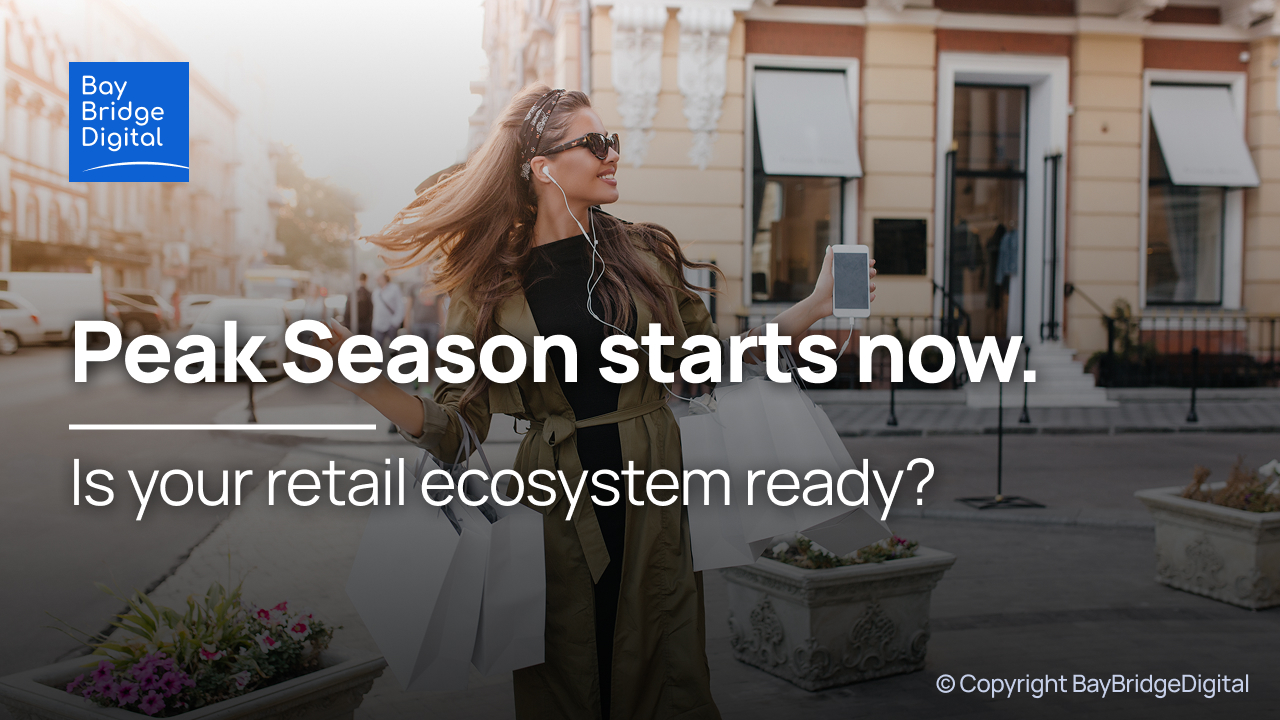
Saudi National Day, 11.11, White Friday, UAE National Day and the year-end festive season: the Middle East’s major retail moments are fast approaching.
For retailers, the return from summer is more than a resumption of business activity. It marks the final stretch before one of the most strategic trading periods of the year.
At this stage, the priority is no longer to redesign the entire retail ecosystem. It is to make sure data flows seamlessly, customer journeys work as expected, teams have the right tools and operations can handle increased demand.
Because peak season does not start on White Friday. It starts now.
Across the Middle East, peak season is no longer centred around a single promotional event.
The commercial calendar intensifies from September onwards, beginning with Saudi National Day and continuing through 11.11, White Friday, UAE National Day and the year-end festive season.
These events often extend beyond a single day. Promotions may begin earlier, run across several weeks and overlap between markets and channels.
Consumers are also starting their research earlier. According to Mastercard’s 2025 Holiday Shopper Snapshot, more than a quarter of surveyed consumers begin their holiday shopping up to three months in advance, while nearly eight in ten wait for major promotional events to complete their purchases.
At the same time, customers are researching more before making a decision. During the 2025 holiday season, Salesforce recorded a 13% year-on-year increase in global ecommerce traffic, while order volumes grew by only 3%.
For retailers, this means more interactions, more comparisons and greater pressure to deliver value at every stage of the journey.
Performance will therefore depend on more than discounts. It will rely on retailers’ ability to connect their data, channels and operations to engage the right customer, at the right time and in the right market.
An issue that goes largely unnoticed during a quieter trading period can become critical as volumes increase.
Inaccurate inventory information can lead to more cancellations. A mismatch between online and in-store promotions can damage trust. A payment method that does not work properly can interrupt conversion. An unprepared service team can quickly become overwhelmed by enquiries about orders, deliveries and returns.
The post-summer period should therefore serve as a full dress rehearsal.
This is the time to test journeys from end to end, simulate traffic and order peaks, and identify potential breakdowns before they affect customers and employees.
For retailers operating across several Middle Eastern markets, these tests must also account for local languages, currencies, payment preferences, delivery options and commercial calendars.
Peak season cannot be managed as a succession of isolated campaigns. It must be approached as one connected experience.
Retailers have access to vast amounts of information: purchase histories, browsing activity, loyalty data, customer preferences, service interactions, in-store activity and product availability.
But volume alone does not make data useful.
When information remains scattered across ecommerce platforms, stores, loyalty programmes, customer service systems and regional entities, teams are left with an incomplete view of both the customer and the business.
Before peak season, the priority is to make this data reliable, accessible and actionable.
Teams must be able to:
This foundation is also essential for deploying AI effectively. An agent can only recommend a product, answer a question or automate an action successfully if it is grounded in trusted and properly governed data.
Customers do not think in channels.
They may discover a product on social media, continue their research through a mobile app, check availability online, visit a mall, complete the purchase through a digital payment method and later contact customer service.
Any disconnect between these steps can damage the experience: a product displayed as available but missing from the store, a promotion that is not recognised at checkout, an online order that store associates cannot access or inconsistent information between Arabic and English channels.
Consistency is now a clear expectation. According to Salesforce’s global State of the AI Connected Customer study, conducted among more than 16,000 consumers and business buyers, 69% of respondents expect consistent interactions across departments.
Peak season preparation must therefore cover the entire journey:
Prices, promotions, inventory, orders and customer information should remain consistent, regardless of the market or touchpoint used.
Product availability becomes particularly critical as demand increases.
Deloitte’s 2025 Retail Holiday Buyer Survey found that 78% of surveyed retail buyers were concerned about securing sufficient inventory for the holiday season. A further 76% were concerned about supplier reliability.
Although this study focuses on the US market, the operational challenge is highly relevant to retailers managing inventory across several Middle Eastern countries, warehouses, stores and ecommerce platforms.
Holding enough stock is only part of the challenge. Retailers must know where inventory is located, make it available through the right channel and select the most appropriate fulfilment option.
This requires:
The objective is twofold: fulfil the promise made to the customer and protect the profitability of every order.
Peak season increases orders, customer interactions, service requests and operational exceptions at the same time.
Teams must be able to manage this additional activity without compromising service quality.
Preparation requires clear processes, accessible information and well-defined responsibilities. It also means identifying repetitive tasks that can be automated, such as retrieving information, tracking orders, answering common questions, summarising customer records or prioritising requests.
AI can support teams, accelerate resolution times and free employees to focus on situations that genuinely require human expertise.
During the 2025 holiday season, Salesforce found that retailers’ use of AI agents for customer service increased by 126% compared with the previous two months. Over the same period, agents handled 142% more tasks, particularly around returns and shipping updates.
The ability to respond quickly has a direct impact on customer retention. According to Salesforce, 43% of consumers say a poor customer service experience could prevent them from making another purchase from a brand.
For Middle Eastern retailers, readiness also means ensuring that service teams can respond consistently across languages, countries and channels.
A peak season strategy cannot rely solely on the previous year’s performance.
Customer behaviour, campaign results, tourism flows, inventory levels and demand can vary significantly between countries and retail moments.
Retailers need a shared view of the metrics that matter most:
This visibility helps teams identify issues earlier, adjust campaigns, reallocate inventory and reinforce resources wherever pressure is increasing.
The objective is not to multiply dashboards. It is to give teams the information they need to make faster, better-informed decisions.
Peak season does not end when an order is placed or delivered.
Of the online purchases made worldwide between 1 November and 31 December 2025, Salesforce estimated that 14% had already been returned, representing more than $181 billion in merchandise.
Returns policies, refund tracking, inventory reintegration and customer communications must therefore be considered from the start.
For retailers operating across multiple Middle Eastern markets, these processes must also remain consistent despite differences in logistics, local policies and fulfilment models.
A poorly managed return can undo an otherwise positive shopping experience and compromise a future purchase.
Peak season success is not simply about keeping an ecommerce platform online or processing more orders.
It depends on the ability to deliver a seamless, relevant and consistent experience while activity intensifies across markets and channels.
The best-prepared retailers can use this period to deepen customer knowledge, personalise interactions, strengthen loyalty and turn a seasonal purchase into a lasting relationship.
The post-summer period is therefore a decisive moment. The coming weeks should be used to test, fix and align the entire retail ecosystem before demand accelerates.
Are your data, customer journeys and operations truly ready for peak season?
BayBridgeDigital helps retailers across the Middle East connect their data, commerce operations and customer experiences through the Salesforce ecosystem.
Speak with our experts to identify the priorities you need to address before the region’s major retail moments.